Electrochemical Impedance Spectroscopy전기화학 임피던스 분광법
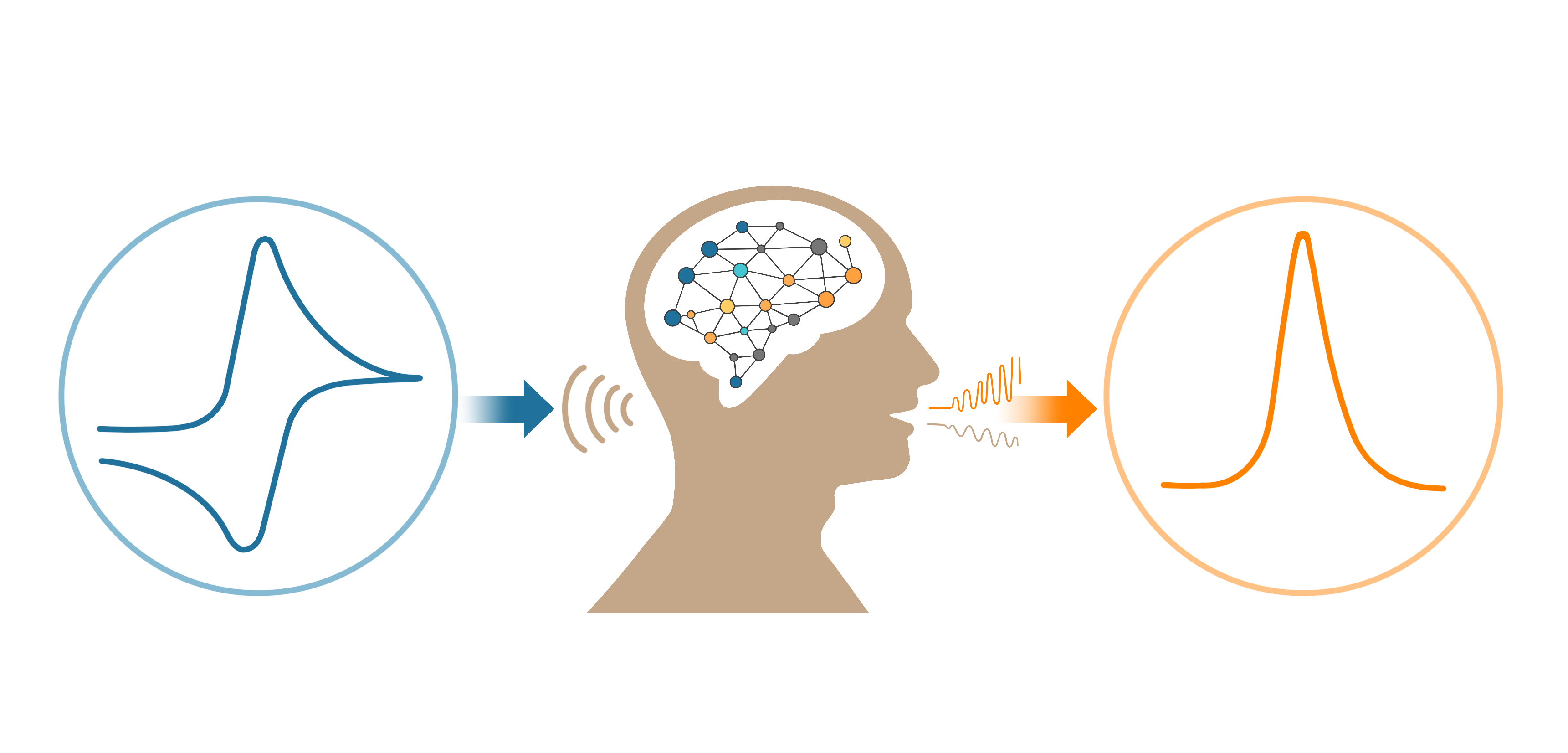
EIS sits at the center of ACE Lab. By separating overlapping electrochemical processes across time scales and frequencies, we use it to get at mechanisms that are otherwise hard to see.EIS는 ACE Lab 연구의 중심이며 기본이 되는 연구입니다. 복합적인 전기화학 현상을 서로 다른 시간 척도와 주파수로 분해함으로써 전기화학의 숨어있는 메커니즘을 연구할 수 있습니다.
Determination of Equivalent Circuits for Electrochemical Impedance Spectra Using Convolutional Neural Networks
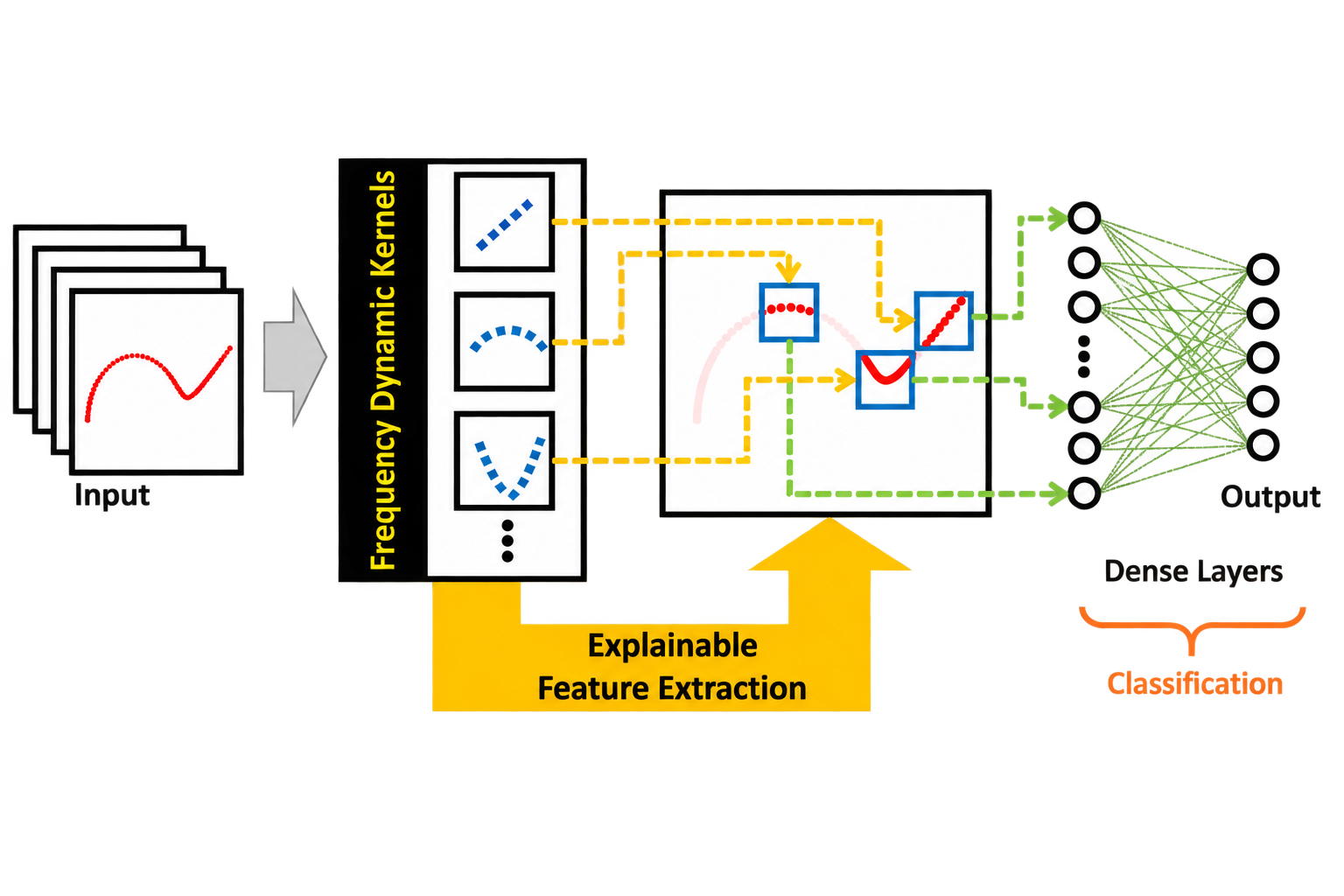
A convolutional neural network looks at the shape of a Nyquist plot and predicts the most likely equivalent circuit. It reached more than 80% accuracy on spectra generated with randomized circuit parameters, and transfer learning lets us carry what it learned into more complex circuit classes.컨볼루션 신경망(CNN)을 이용하여 Nyquist plot의 모양을 보고 동등 회로의 가능성을 예측합니다. 무작위 회로 파라미터로 만든 스펙트럼에서 80% 이상의 정확도를 보였습니다. 뿐만 아니라 학습된 모델은 더 복잡한 동등 회로를 학습하는데 활용하는 전이학습(transfer learning)을 가능하게 합니다.
L. D. Ha et al. · npj Comput. Mater. 2026 · DOI: 10.1038/s41524-026-02225-4
Read the paper ↗논문 보기 ↗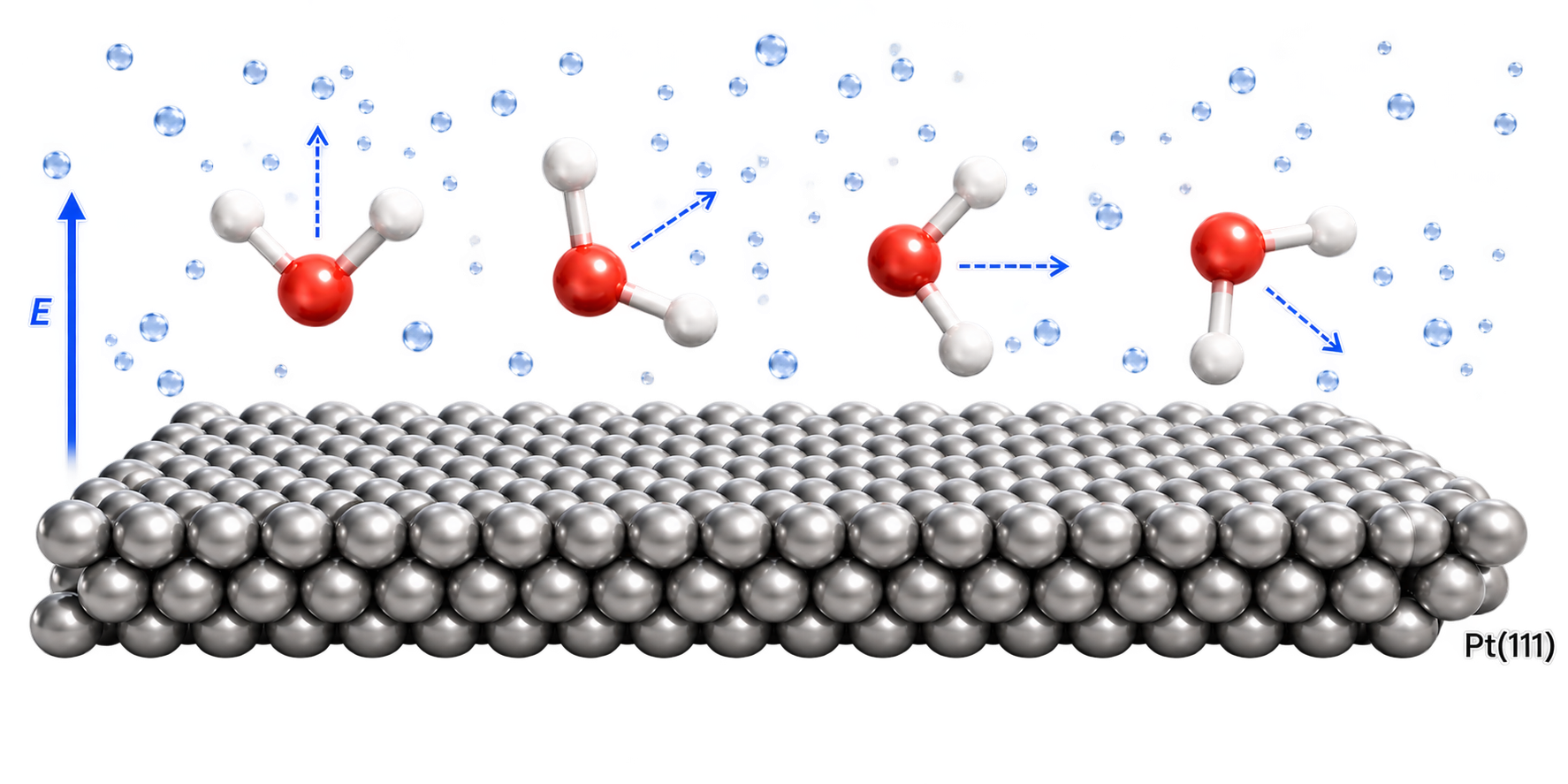
A Quantum Orientational Ensemble for Understanding the Point of Charge at the Pt(111)/Pure-Water Interface
We describe the Pt(111)/pure-water interface with a quantum orientational ensemble. The idea is simple: water molecules near an electrode do not rotate as if the surface were not there.양자 지향성 앙상블(quantum orientational ensemble)을 이용해 Pt(111)/순수 물 계면과 point of charge를 해석합니다. 물분자는 전극 표면에서 무작위적인 회전을 하지 않습니다.
B.-Y. Chang, C. H. Hendon · J. Electrochem. Sci. Technol. 2026 · DOI: 10.33961/jecst.2026.00339
Read the paper ↗논문 보기 ↗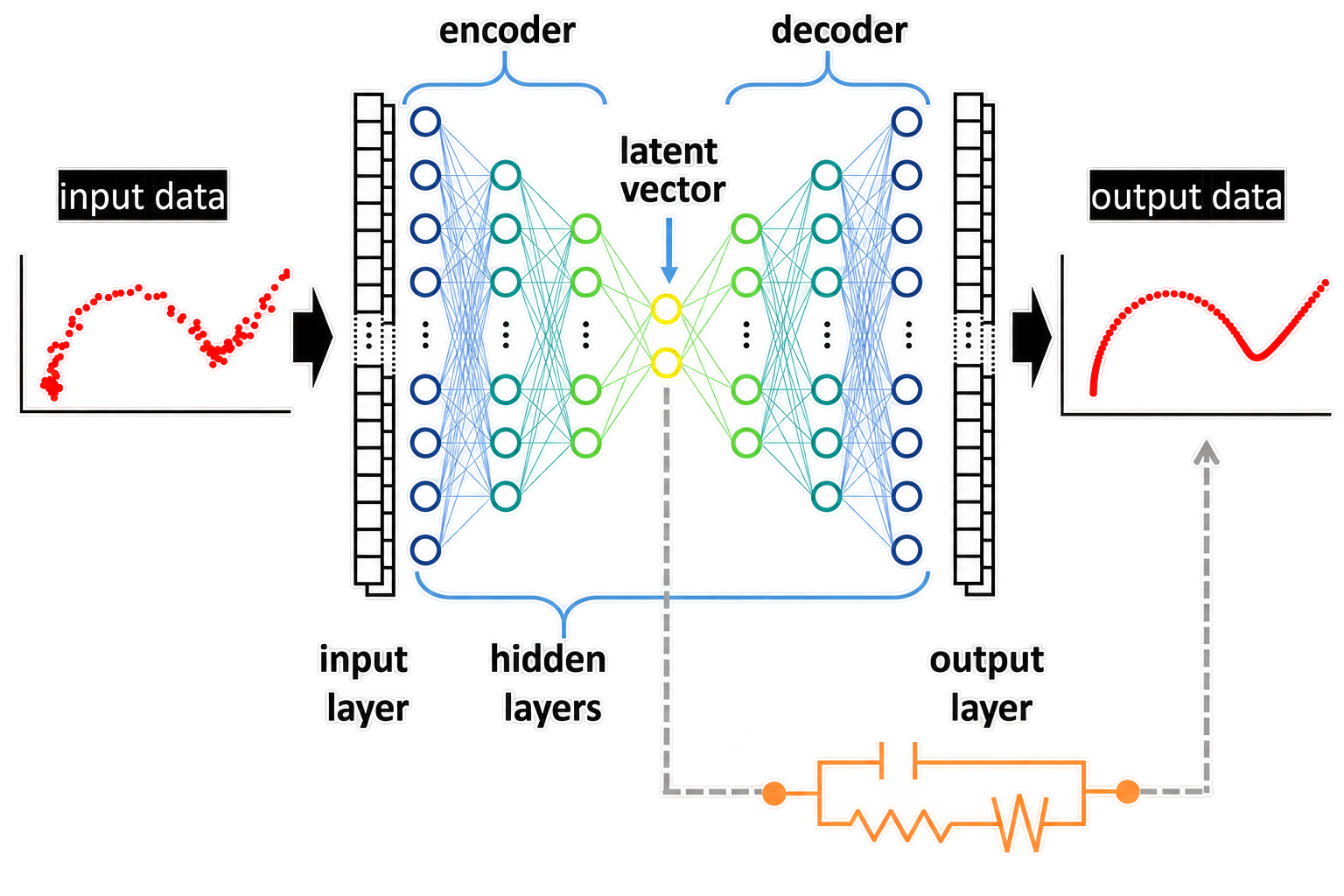
A Novel Analysis Method for Electrochemical Impedance Spectra Using Deep Learning
We measured EIS while changing the potential, much like recording a CV, then used an autoencoder to fold the hidden changes into a two-dimensional latent space. The coordinates track charge transfer, mass transport, and double-layer charging, while decoding reconstructs cleaner spectra.CV를 측정하는 것처럼 전위에 따라 변화하는 EIS 스펙트럼을 측정하였으며, 오토인코더로 숨어있는 변화요소를 2차원 잠재 공간에서 표현하였습니다. 그 결과 전하 전달, 물질전달, 이중층 충전과 관련된 변화를 읽을 수 있고, 디코딩 과정을 통해서 그 과정들로만 이루어진 노이즈가 제거된 스펙트럼으로 복원합니다.
B.-Y. Chang · Electrochim. Acta 2023, 462, 142741 · DOI: 10.1016/j.electacta.2023.142741
Read the paper ↗논문 보기 ↗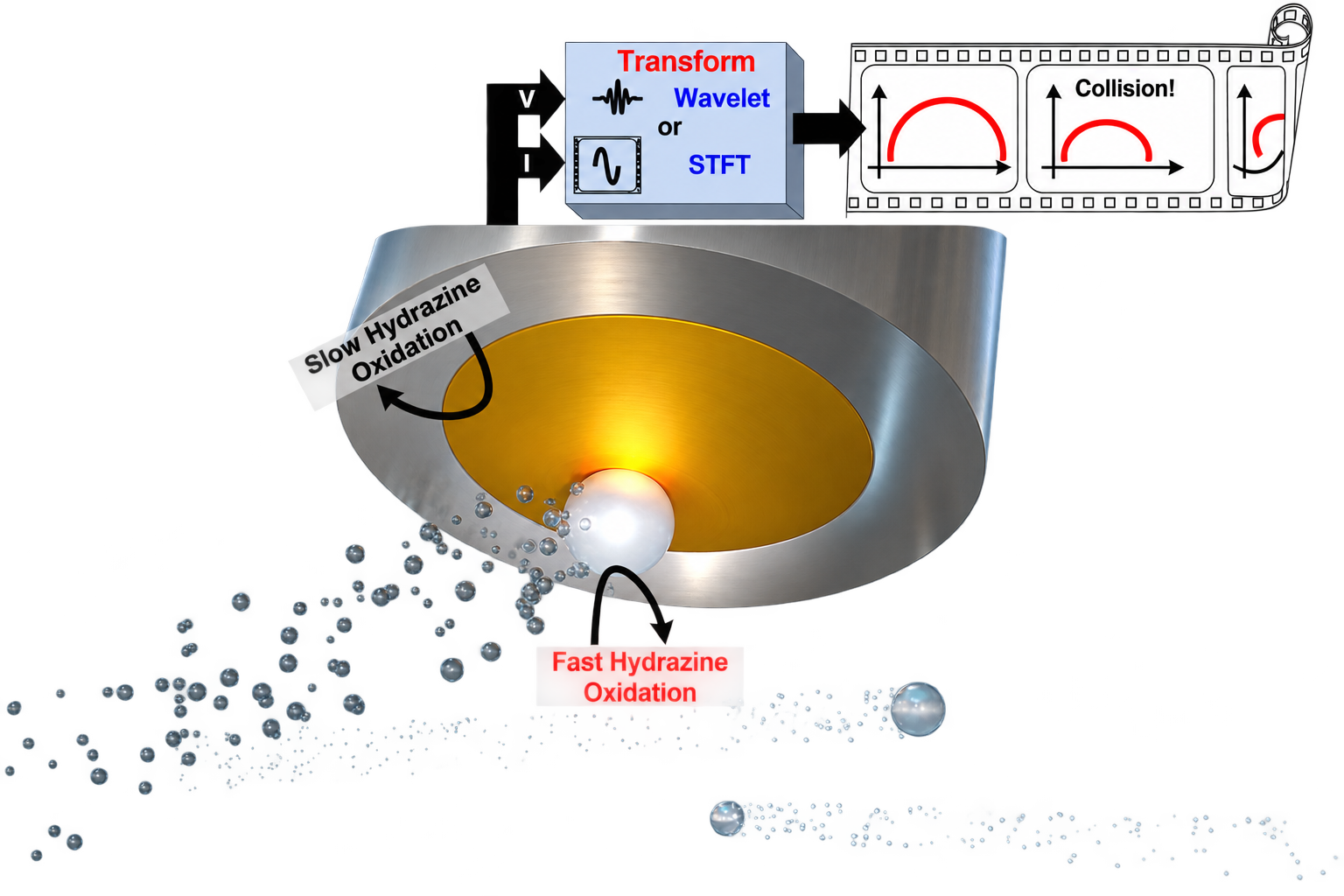
Time-Resolved Electrochemical Impedance Spectroscopy of Stochastic Nanoparticle Collision: Short Time Fourier Transform versus Continuous Wavelet Transform
We used time-resolved EIS to follow stochastic Pt nanoparticle collisions at a gold ultramicroelectrode. Comparing short-time Fourier and continuous wavelet transforms showed that the wavelet approach resolves the collision events more sharply while preserving single-particle charge-transfer information.Pt 나노입자가 금 초미세전극과 충돌하는 순간을 time-resolved EIS로 봤습니다. Short-time Fourier transform과 continuous wavelet transform을 비교했고, wavelet 방식이 충돌을 더 높은 시간 분해능으로 잡아냈습니다.
L. D. Ha, K. J. Kim, S. J. Kwon, B.-Y. Chang, S. Hwang · Small 2023, 19, 2302158 · DOI: 10.1002/smll.202302158
Read the paper ↗논문 보기 ↗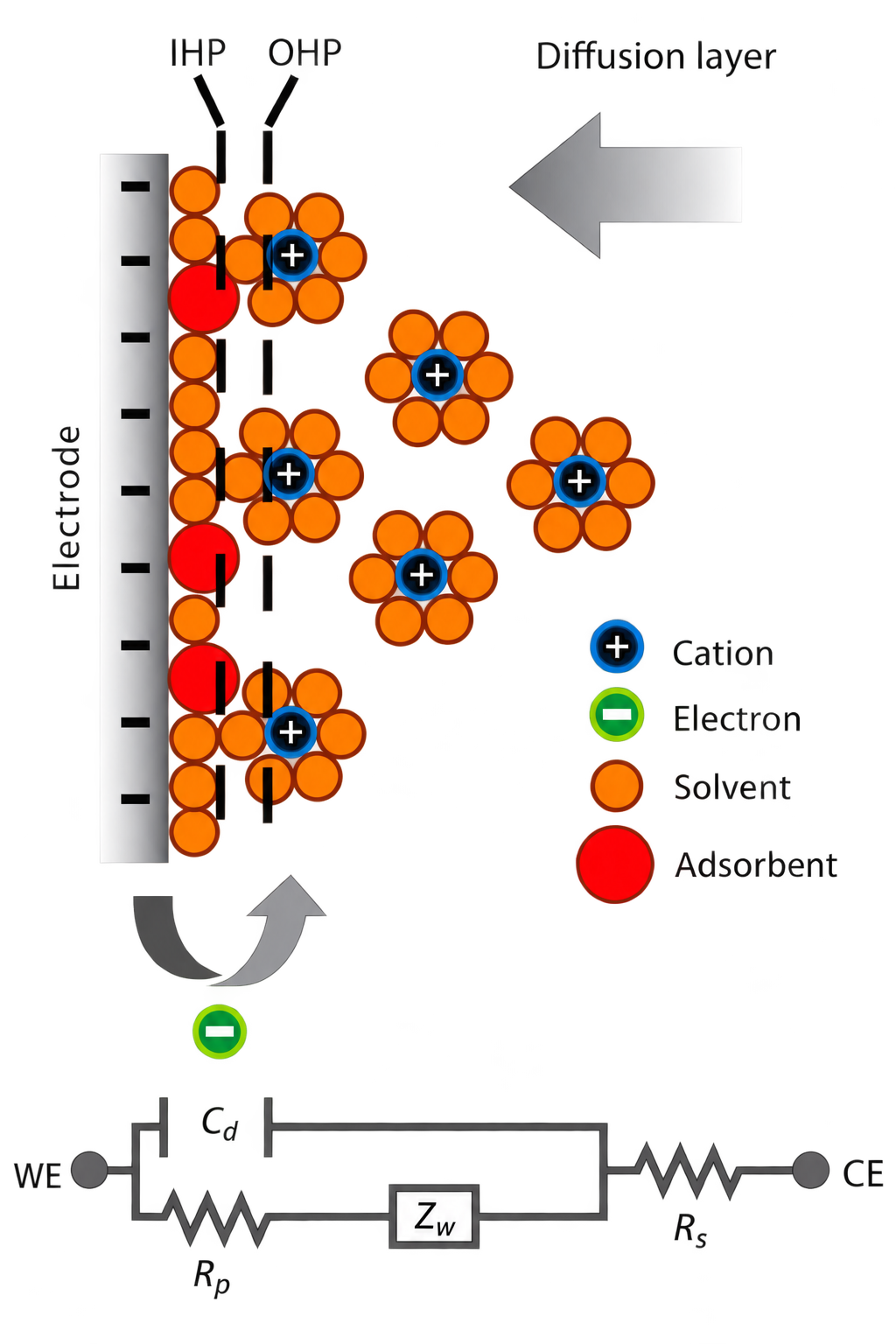
Electrochemical Impedance Spectroscopy
A review of how EIS has evolved: faster measurements, time-resolved experiments, impedance imaging, biosensing, and the methods behind them.EIS가 어떻게 더 빠르게 측정되고, 시간에 따라 추적되고, 다양한 시스템에 쓰여 왔는지를 정리한 리뷰입니다. Multisine, white-noise, time-resolved EIS, impedance imaging, biosensing을 다룹니다.
B.-Y. Chang, S.-M. Park · Annu. Rev. Anal. Chem. 2010, 3, 207–229 · DOI: 10.1146/annurev.anchem.012809.102211
Read the paper ↗논문 보기 ↗